There is something powerful about knowing who you are and refusing to let your surroundings change that.
In this week's Torah portion, Jacob sends a message to his brother Esau after twenty years apart. He tells him, “I have sojourned with Laban.” The Hebrew word for sojourned, “garti,” has the numerical value of 613, corresponding to the 613 commandments of the Torah.
Jacob was telling Esau that despite spending twenty years in the home of Laban, a man known for his dishonesty and questionable values, “I have not changed. I remain committed to my Jewish identity and the values I was raised with.”
Jacob understood that the way to face a challenging environment is not to abandon who you are, but to become even more grounded in your identity. And when he finally meets Esau, the brother who had threatened to kill
him, Esau embraces him. Some commentators question the sincerity of that embrace, while others see it as a genuine moment of compassion.
This message takes on added meaning as we approach the 19th of Kislev, the anniversary of the liberation of Rabbi Schneur Zalman of Liadi, founder of Chabad Chassidism, from imprisonment in Tsarist Russia in 1798. His
release marked a turning point in the spread of Chassidic teachings, which emphasized that every Jew has a soul and a unique connection to G-d.
Jewish survival has never depended on blending in or winning everyone’s approval. It depends on knowing who we are and living accordingly. Whether through a mitzvah, a Shabbat candle, a Jewish tradition, or simply standing proudly as a Jew, every expression of Jewish identity makes a difference.
Shabbat shalom,
Service Times:
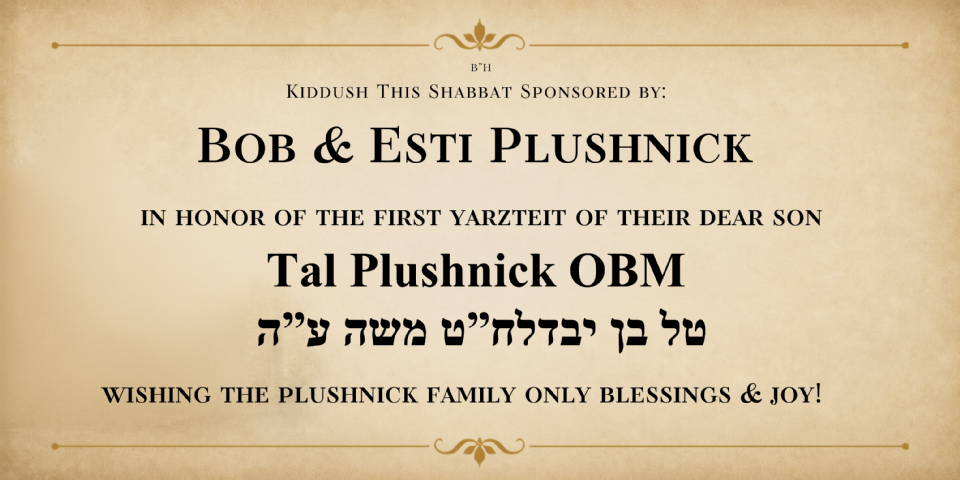
Kiddush Sponsored By:
Picture of the Week:
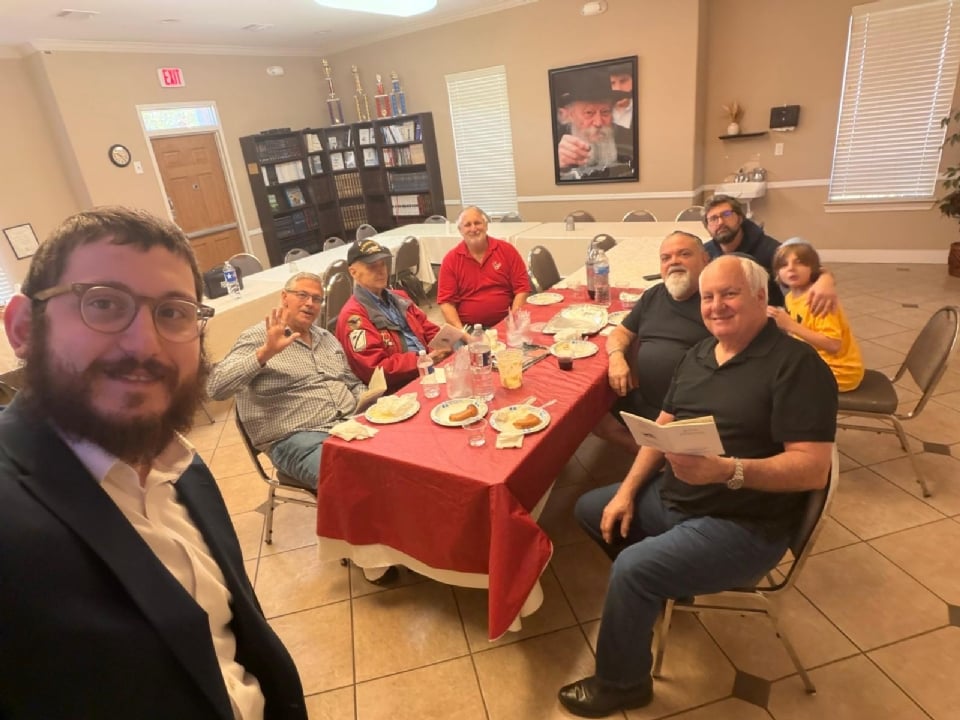
The Weekly Sunday Morning Tefillin and Breakfast Club!
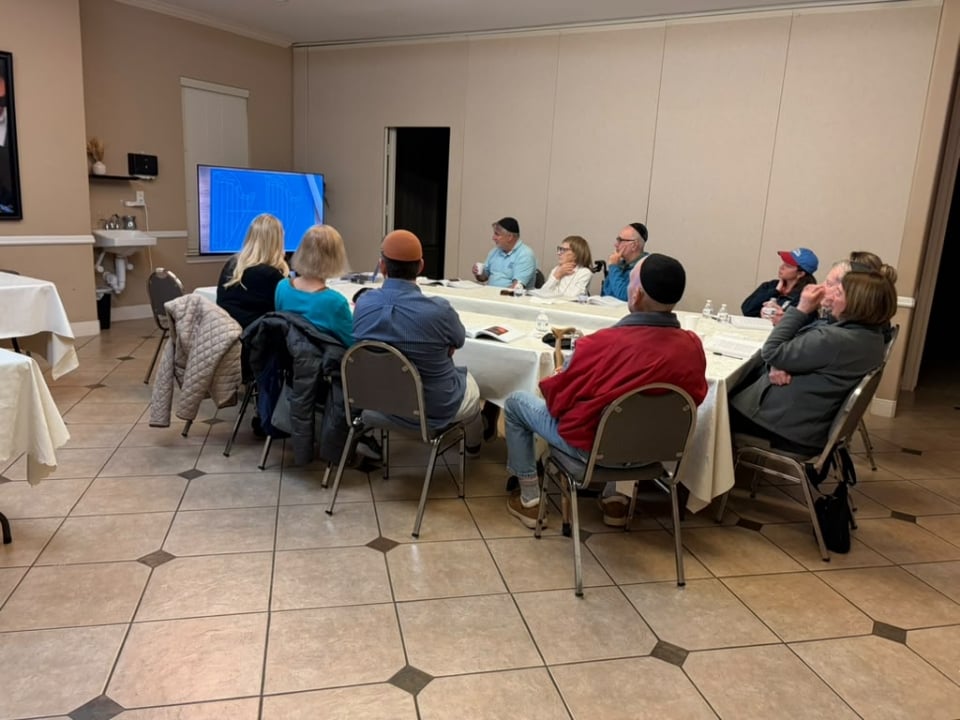
JLI Fall Course - Lesson 5, this past Tuesday evening.
Last Chanukah, we lit the menorah barely an hour after the horrific Bondi attack. I remember standing with my family, struggling to hold back tears. The grief was overwhelming.
Now, as Chanukah approaches again, just imagining those candles brings it all back. I'm afraid that instead of feeling the joy of Chanukah, I'll be transported straight back to that terrible night.
How do we celebrate when the memories are so painful?
Answer:
Trauma is like a time machine. But it isn't science fiction. It's real.
We can be standing here today, yet emotionally be somewhere else entirely.
A familiar tune, a particular smell, a passing comment, and suddenly the years disappear. We are back there. Not just remembering what happened, but feeling it all over again.
For many of us, this Chanukah will be a difficult time. But perhaps Chanukah can also help us get through it.
When we light the menorah, we thank G-d for the miracles He performed bayamim hahem bizman hazeh, "in those days, at this time."
The miracles of Chanukah are not just ancient history. The spiritual light revealed then shines again today. We don't merely commemorate a victory from long ago. We draw its light into our lives right now.
And that is the message we need for this Chanukah.
We cannot erase the past. The grief is real. The loss is real. And if tears come when we light the menorah, there is no reason to hold them back.
But remembering the past is not the same as being back there.
Look at the flames, and see the light that is shining bizman hazeh, right here, right now. Look at the faces of your loved ones, feel the warmth of their presence, hear the sound of their voices singing those familiar songs.
Last year, we stood before the menorah in shock, trying to comprehend the incomprehensible. This year, we stand before the menorah again. We carry the same memories, but we are not standing in that same terrible hour.
The past is with us, "in those days". But so is the present, "at this time". We can miss those who are no longer with us and cherish those who are.
The candles may bring us back to the darkness of that night.
But they can also bring us back to the light of this moment.
To further trample any sense of Jewish pride, Tsar Nicholas I issued a new decree: Peyot—the locks of hair Jewish men allow to grow from their temples—were hereby banned. Anyone caught with them would be subjugated to a public haircut, usually done by gleeful soldiers with bayonets.
The response from the Jewish public varied. Most either curled their peyotbehind their ears, stuffed them underneath their kippahs, or trimmed them to slivers.
Some, however, like Rabbi Hillel of Paritch (who lived in Bobruisk, Belarus, at the time) simply did nothing. No one, not even the tsar himself, could intimidate Reb Hillel. His peyot remained untouched.
And then it happened. The long tufts of silvery hair dangling down the sides of Reb Hillel’s head couldn’t possibly go unnoticed. Without a moment’s hesitation, an officer tackled Reb Hillel to the
ground, ready to hack off his peyot, but he found the task more difficult than he had anticipated. Eyes squeezed shut, Reb Hillel clapped his hands over the sides of his face, and try as he might the officer couldn’t pry them off.
A Jewish tailor, who sewed military uniforms for a living, found Reb Hillel pinned to the ground, fending off swipes from the desperate officer.
“Leave him alone! Get off of him!” the tailor yelled. “This Jew is a righteous man. Treating someone that holy like this is inappropriate and insulting!”
“Leave him alone! Get off of him!”
It may have been the tailor’s panicked shouts, or perhaps it was plain exhaustion, but the officer grunted in disappointment and slid off the old Jew.
Reb Hillel was euphoric. “I promise you,” he told his benefactor, “that your burial place will be adjacent to mine.”
When Reb Hillel passed away a few years later, he was buried in Kherson, in southern Ukraine.
With time, the tailor turned gray and decided to travel to visit his daughter who lived in Kherson. On the way back to Bobruisk, home, ill health compelled him to return to his daughter’s home, and within a short time he returned his soul to its Maker.
The funeral took place on a blustery day with snow covering every nook and cranny. Picking the burial plot would be tricky in those conditions. Since the departed was a stranger from faraway Bobruisk, the committee decided to bury him at the edge of the cemetery.
As warmer weather came round and the snow melted, they discovered their mistake: The simple tailor from Bobruisk had been interred right beside Rabbi Hillel, an honor reserved for the most prestigious citizens!
The local rabbi was consulted, but he did not allow the body to be moved. After all, tampering with a grave is a serious affront.
But how could such a thing have happened? The rabbi decided to pursue his own research.
A letter from the rabbi of Bobruisk revealed everything he needed to know. Rabbi Hillel’s blessing had been fulfilled.
Parsha Riddle!
This week's parsha features a grand wrestling match! Who was involved, and who won?
By the Numbers Jaw-Dropping:
12 Facts About Crocodiles in Judaism Our ancestors met them while enslaved in Egypt, and again in the Land of Israel, where crocodiles roamed until as late as the early 1900s.
Video What
Is Yud-Tes Kislev? The Chassidic New Year, Explained Discover how a 1798 Russian prison release became the "New Year of Chassidus" on the 19th of Kislev, unlocking divine permission to bring the inner, mystical wisdom of Torah into everyday life.
Jacob journeys on. Rachel dies while giving birth to her second son, Benjamin, and is buried in a roadside grave near Bethlehem. Reuben interferes with his father’s marital life. Jacob arrives in Hebron, to his father, Isaac, who later dies at age 180. (Rebecca has passed away before Jacob’s arrival.)
Our Parshah concludes with a detailed account of Esau’s wives, children and grandchildren; the family histories of the people of Seir, among whom Esau settled; and a list of the eight kings who ruled Edom, the land of Esau’s and Seir’s descendants.
Everything we do is made possible by people like you, local Jews invested in the future of our community. Become a partner and help us continue building Jewish life in Sugar Land.
This email is sent from Chabad of Sugar Land. We'd love to stay in touch with you, but if you wish to be unsubscribed from this list please click here, or click here to manage your subscriptions.