We often do small things for other people without thinking much about them. We may forget about the gesture almost immediately, but Judaism teaches that these moments can have an impact far beyond what we see.
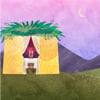
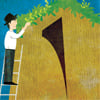
Sukkot offers a fascinating example. The Midrash connects the mitzvah of sitting in a sukkah to Abraham, who welcomed three travelers and offered them shade beneath a tree. Because Abraham provided shade for others, his descendants were given the mitzvah of sitting in the shade of a sukkah.
Abraham did good because it was in his nature. He recognized that helping another person was the right thing to do. The tree represents that kind of goodness: rooted in who we are and what we naturally choose to do.
The sukkah takes that idea a step further. When we sit in a sukkah, we are doing something because G-d commanded us to. It takes us beyond our own instincts and reminds us that there is something greater than ourselves.
Judaism also speaks of a future sukkah, the “Sukkah of Leviathan,” representing a time when our connection with G-d will be complete and unobstructed.
That is the journey Sukkot invites us to consider. We begin by doing what feels right. We grow by recognizing something greater than ourselves. And we look forward to a world in which that connection becomes complete.
For now, we sit in a simple, temporary sukkah, grateful for the shade we receive and mindful of the shade we can provide for others.
Once, the Baal Shem Tov was sitting with his students at a festive Rosh Chodesh meal. His expression was unusually serious. His students tried everything they could think of to lift his spirits, but nothing seemed to work.
Then a simple Jewish villager named Reb Dovid entered the room. The Baal Shem Tov immediately brightened. He warmly welcomed Reb Dovid, invited him to sit, and personally offered him a piece of bread.
The students were puzzled. They had all tried unsuccessfully to bring joy to their teacher—yet the arrival of this seemingly ordinary man had transformed his mood.
The Baal Shem Tov understood their confusion. After Reb Dovid left the room, he explained:
“Reb Dovid works extremely hard for every penny he earns. Throughout the year, he carefully saves whatever he can so that he will be able to purchase a beautiful etrog for Sukkot. This year, after overcoming
many difficulties and traveling a long distance, he finally bought an especially beautiful one. It brought him tremendous joy.
“His family, however, was struggling financially. His wife, overwhelmed by the needs of their household, became deeply upset that he had spent so much on the etrog. In her bitterness she broke the pitom (tip) of the etrog (rendering it possul, unfit for use)."
"Now, besides the money that he spent on the etrog, there were many obstacles to bringing it, water to cross, bad roads, so that it all added up to much hard effort. Yet, when he saw what his
wife had done he was not angry, but said: "It appears that I am not worthy of such an etrog. Truly, does a simple Jew like me deserve such a fine etrog?!"
"From the time of the Akeidah (the 'Binding of Isaac')," concluded the Baal Shem Tov, "there was not such a test of character, and therefore I treated him so warmly."
Adapted from Sefer Hasichot 5696, p. 148
Question:
I can't explain it, but after Yom Kippur I feel really sensitive. Something opened up in me spiritually on the day. I was very uplifted and inspired, but my soul feels quite fragile since then. Is this normal, and what do I do about it?
Answer:
Yes. It is normal to feel spiritually exposed after Yom Kippur. You are feeling this way because you are now a baal teshuva.
A baal teshuva means someone who has returned, turned back to G-d and reconnected with their soul. That is exactly what Yom Kippur is about.
Throughout the year, our mistakes, missteps, and daily cynicism build up like layers of dust over the soul. We use them to protect ourselves, but they also block our light. On Yom Kippur, those layers are stripped away. The soul is scrubbed clean.
When you step out of a dark room into blazing sunlight, your eyes sting. When tender new skin is exposed, it feels sensitive to the touch. That is what your soul just experienced. Your defensive layers are gone, leaving you pure, radiant, and deeply vulnerable.
With this we can understand a very dramatic statement in the Talmud: "In the place where a baal teshuva stands, even the completely righteous cannot stand."
It is wonderful to be righteous, but someone who was not so good, and then regretted it, repaired it and came back, can reach a place that the always-righteous cannot.
What place is the Talmud talking about? The Chassidic masters take those words literally. There is a place that belongs especially to those who have returned.
That place is the sukkah.
The sukkah is a space of holiness and elevation. The air in the sukkah is the air of the Holy Land. Its atmosphere is different. But to appreciate that, you can only enter that space after Yom Kippur, after the soul has been opened.
This is why Sukkot follows immediately after Yom Kippur. G-d wants to embrace us. He wants us close. He wants to surround us with His love.
He sees your open, sensitive soul and says: I have a place just for you. Come inside.
Good Shabbos and Good Yomtov,
Rabbi Moss
Sources:
Talmud, Berachot 34b
Sfas Emes, Sukkot 5636, 5639
Parshah Riddle:
We don't read a standard complete Torah Portion this Shabbat, as it is the first day of Sukkot.
By the Numbers 9
Reasons You'll Love Sitting in a Sukkah For just over one week a year, the Jewish world moves out to the shady confines of the sukkah. Here are nine reasons you'll want to pull up a chair.
Your Questions Why
Is Sukkot Happier Than Any Other Jewish Holiday? Passover is the "Season of Our Liberation," Shavuot
is the "Season of the Giving of Our Torah" and Sukkot is described
simply as the "Season of Our Rejoicing!"
On Simchat Torah ("Rejoicing of the Torah") we conclude, and begin anew, the annual Torah-reading cycle. First we read the Torah section of V'zot HaBerachah, which recounts the blessings that Moses gave to each of the twelve tribes of Israel before his death. Echoing Jacob's blessings to his twelve sons five generations earlier, Moses assigns and empowers each tribe with its individual role within the community of Israel.
V'zot HaBerachah then relates how Moses ascended Mount Nebo from whose summit he saw the Promised Land. "And Moses the servant of G‑d died there in the Land of Moab by the mouth of G‑d... and no man knows his burial place to this day." The Torah concludes by attesting that "There arose not a prophet since in Israel like Moses, whom G‑d knew face to face... and in all the mighty hand and the great awesome things which Moses did before the eyes of all Israel."
From the time that G-d said to our father Abraham, "Go from your land..." and "Abraham went on, journeying southward", began the process of "birurim" -- of extracting the sparks of holiness that are scattered throughout the universe and buried within the material existence... By the decree of Divine providence,
a person wanders about in his travels to those places where the sparks that are to be extracted by him await their redemption.
Everything we do is made possible by people like you, local Jews invested in the future of our community. Become a partner and help us continue building Jewish life in Sugar Land.
This email is sent from Chabad of Sugar Land. We'd love to stay in touch with you, but if you wish to be unsubscribed from this list please click here, or click here to manage your subscriptions.