Save your Goldfish or your Mother?
ב"ה

The Chabad of Sugar Land Weekly Newsletter

Icon
Candle Lighting Times for
Sugar Land, Texas:
Friday, Jul. 3
8:08 pm

Message from the Rabbi

Dear Friends,

This week’s Torah portion, Pinchas, tells the story of someone who never expected to become a leader. Pinchas was neither the oldest nor the most prominent member of the Jewish people. Yet when everyone else hesitated, he understood what had to be done and acted with courage and conviction. His reward was not fame or power, but G-d’s blessing of peace.

Most of us will never face a moment as dramatic as Pinchas did. But we regularly encounter smaller moments that call for the same kind of responsibility. It’s easy to assume that someone more experienced or more qualified will step in. Waiting for the perfect person often means nothing gets done. Sometimes the person who makes the biggest difference is simply the one willing to take the first step.

The world is shaped not only by extraordinary people, but by ordinary people who refuse to look the other way, and Pinchas reminds us that greatness often begins with a simple decision: when something needs to be done, be the one who does it.

Each of us has opportunities to improve the lives of those around us. We simply need the willingness to act when the moment calls for it.

Shabbat shalom,


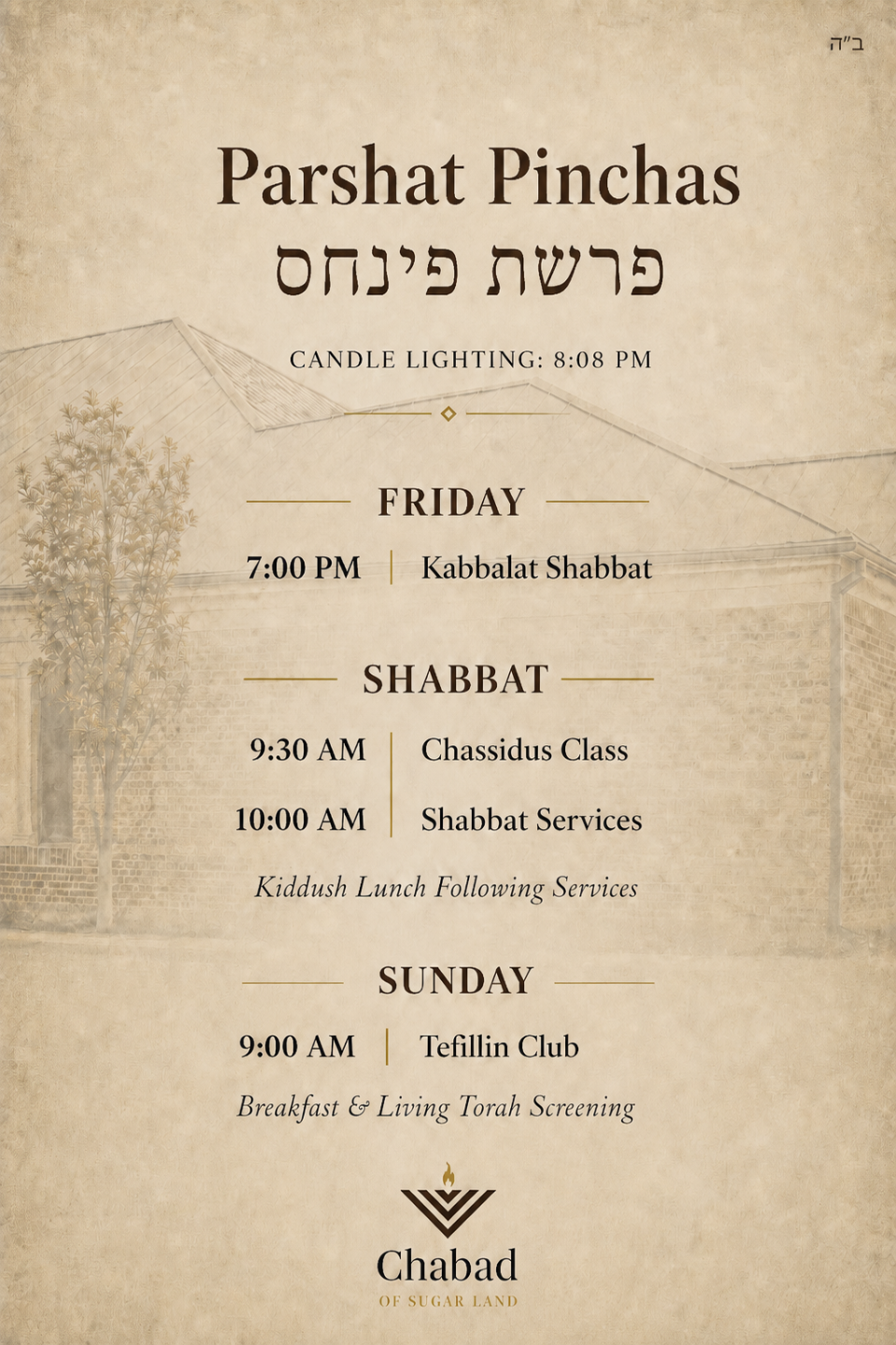
Service Times:

Weekly Parsha Video

Pinchas:  You're Never Alone in the Darkness.

Click here to watch!


Weekly Story


Reb Mordechai, a follower of the third Rebbe of Chabad, Rabbi Menachem Mendel of Lubavitch (1789-1866) had been dispatched by his Rebbe to wander the countryside of Russia, journeying from town to town and inspiring the Jews scattered there with the teachings of Chassidism.


But one day — it was the day before Yom Kippur — he arrived at some town in the middle of nowhere only to hear that all its Jews, about one hundred altogether, had left the day before to the city of Vitebsk to pray in the large synagogue there on the Day of Atonement.


Suddenly, only a few hours away from the holiest day of the year, he found himself without a minyan — the quorum of ten Jews required for communal prayer.


"You won't find any Jews here, Rabbi," one of the townspeople told him. "But about two hours away there's a small village of Cantonists. They're a strange bunch, but that's the closest thing to Jews you'll find around here now."


(The Cantonists were Jews who, by decree of Czar Nicholas I, had been snatched from their families when they were young children for a 25-year term of "service" in the Czar's army, where every cruel means had been employed to force them to abandon Judaism.

The few that survived were so emotionally and psychologically destroyed, when they left the army decades later, that they were never able to live normal lives. So they lived together in little villages, apart from the rest of the world.)


Immediately, Reb Mordechai started walking, but after over an hour he still saw nothing. No... wait! There seemed to be something on the horizon.

Sure enough, there it was. There were only a few old wooden houses, but this must be the village he was looking for.


The first resident that saw that the rabbi enter the village called everyone else, and in no time they were all lined up with shining faces, taking turns shaking the newcomer's hand.


They were overjoyed. Such an honor to have a real rabbi as their guest!


Suddenly they stepped back, formed a sort of huddle, and began whispering to one another. Then they fell silent, looked again at the rabbi, and one of them stepped forward in great humility, cleared his throat, and announced:


"Excuse me, Rabbi, but we would be very honored if His Excellency the Rabbi would please honor us with leading the prayers of Yom Kippur."

All the others stood staring at the Rabbi with wide pleading eyes, nodding their heads beseechingly.


Reb Mordechai nodded in agreement, and the joyous hand-shaking ritual was repeated once again.

"We only have one stipulation," the man continued. "That one of us leads the closing prayer of the holy day, Ne'ilah."


An hour later, in the solemn atmosphere of Yom Kippur, they were all seated in their little shul (synagogue), listening to the beautiful heartfelt prayers of the Chassidic rabbi, Reb Mordechai.


A very special feeling overcame Reb Mordechai. He had never quite experienced a Yom Kippur like this.

He had never been in such a  minyan; comprised of Jews each of whom had been through hell, things that he could never even dream of experiencing, only for the sake of G‑d. And although he had studied all the holy books and they knew nothing, he felt dwarfed by these simple folk.


His soul flowed into the prayers, and it seemed to him that he had never sung so beautifully in his life. First Kol Nidrei, then the evening prayer. On the following day, he prayed the other three prayers, and read twice from the Torah.


But finally, at the end of the day, came their turn; it was time for  Ne'ilah.


Reb Mordechai stepped back, took a seat in the small shul with everyone else, and waited to see what was going to happen.

Why did they want this prayer for themselves?


One of the Cantonists rose from his chair, took a few steps forward and stood at the podium, his back to the crowd.


Suddenly, before he began to lead the prayers, he started unbuttoning and then removing his shirt.

Reb Mordechai was about to say something, to protest: You can't take your shirt off in the synagogue!


But as the shirt fell from the man's shoulders, it revealed hundreds of scars; years upon years of deep scars... each one because the man refused to forsake the G‑d of Israel.


Reb Mordechai gasped and tears ran from his eyes.


The Cantonist then raised his hands to G‑d and said in a loud voice.


"G‑d... Send us Moshiach! Redeem the Jewish people now!


"I'm not asking for the sake of our families, because we don't have any families.


"I'm not asking for the sake of our futures, because we have no futures.


"I'm not asking for the sake of our livelihoods or our comfort, or our children, or our reputations, because we don't have any of those things either.


"We're just asking: Assey l'maan shemecha — Do it for Your sake!"


And then he put on his shirt and began the prayer.


The deepest prayer is not always the most polished one - it's the one that comes from the heart.


Parsha Riddle!


I began as a man with a bold and fiery act,
But my reward was peace — imagine that!


I stood up when others stood still,
Not for anger, not ego — but Hashem’s will.


Who am I, and what was my reward?


Think you know it? Reply with your answer!


The answer will appear in next week’s newsletter.


Answer to last week's riddle:

Billaam's donkey!


Ask The Rabbi: Weekly Q&A


Question:

My teenage daughter came home from school shocked. Her maths teacher told the class that if she had to choose between saving her goldfish or her mother, she would save her goldfish. The students asked, “Is your mother that awful?” "Not at all," she replied. "We're just not very close, and I've had my goldfish for years. I'm very attached to it." 

So the students asked, what if you could only save us or your goldfish, which would you choose? And she said, without blinking an eye, my goldfish. What is wrong here? 


Answer:

That is a fantastic teacher.

She has taught in one lesson what others take years to give over. She has taught by example what happens when people lose a moral compass.


Her moral judgment is based on personal preference. She loves her cat. She loves her goldfish. She isn't close with her mother.

The priorities are clear. I save who I love the most. My pets.


This worldview turns morality into a popularity contest.

Whoever I love most wins. Right and wrong are replaced by likes and dislikes. What’s right for me may not be what’s right for you, as we all have different preferences.

Maybe you love your mother more than you love your goldfish. That’s your business. And if I happen to prefer my mother over my goldfish, well, that’s up to me.


This is a dangerous path.

Once morality is based on personal preference, anything can be justified. Your daughter’s class learnt that when imagining their teacher leaving them to die while she saves her goldfish. 


We don’t think that way.


Right and wrong are not subject to my tastes and fancies. Even if I love my goldfish, a human life is infinitely more valuable. A stranger I've never met takes precedence over my beloved pet.

The value of a life is not measured by how I feel about it. 


Every human being is created in G-d’s image and has infinite worth.

This is not to devalue animals. We must treat them humanely. The Torah commands us to feed our animals before we feed ourselves, and to avoid causing needless harm to any living being.


But when it comes to saving lives, humans come first. 


Tell your daughter she was right to be shocked. Her instincts were spot on.

That teacher was wrong. She should stick to teaching maths, because her morality doesn't add up.


Good Shabbos,
Rabbi Moss

Upcoming Events

Shabbat Services
Shabbat, Jul. 4, 2026 - 10:00 am
At the Chabad Center in Sugar Land, we offer Shabbat and holiday services that are joyous, engaging and uplifting.
Tefillin and Breakfast
Sunday, Jul. 5, 2026 - 9:00 am
Start the week off right! Shacharit prayers, a gourmet bagel breakfast and screening of the weekly Living Torah video

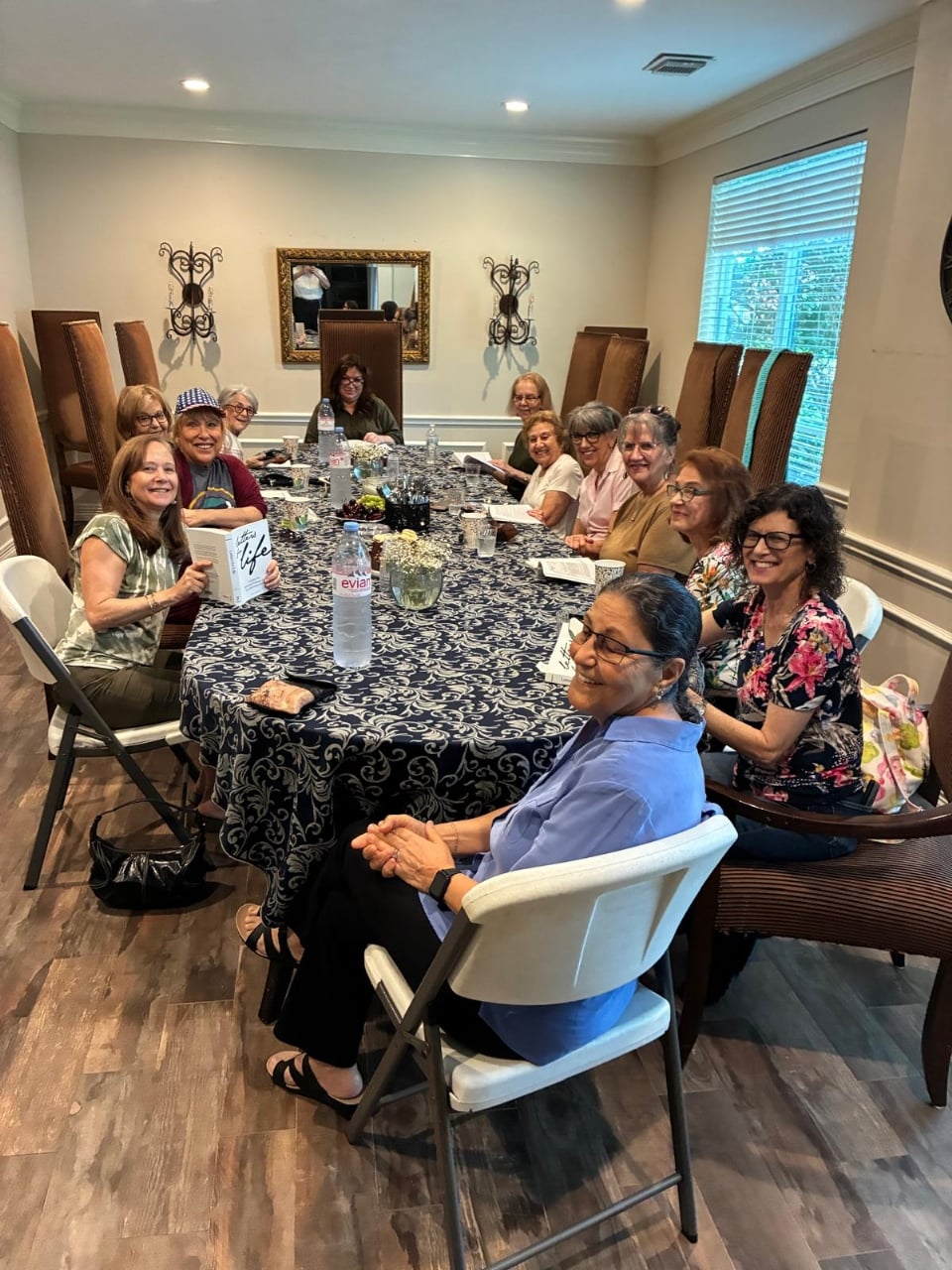
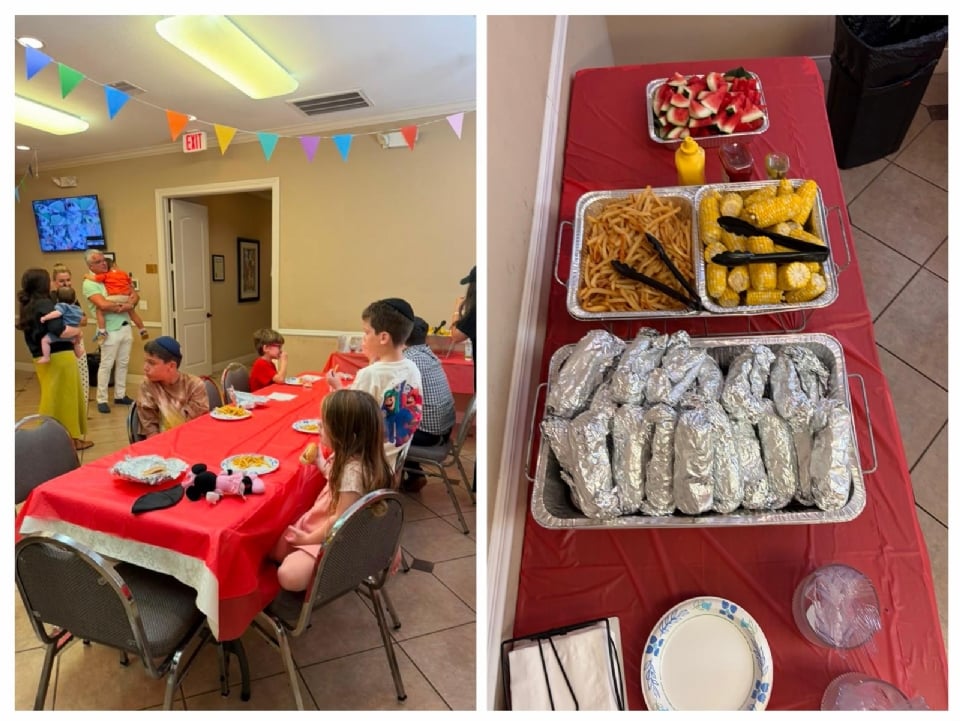
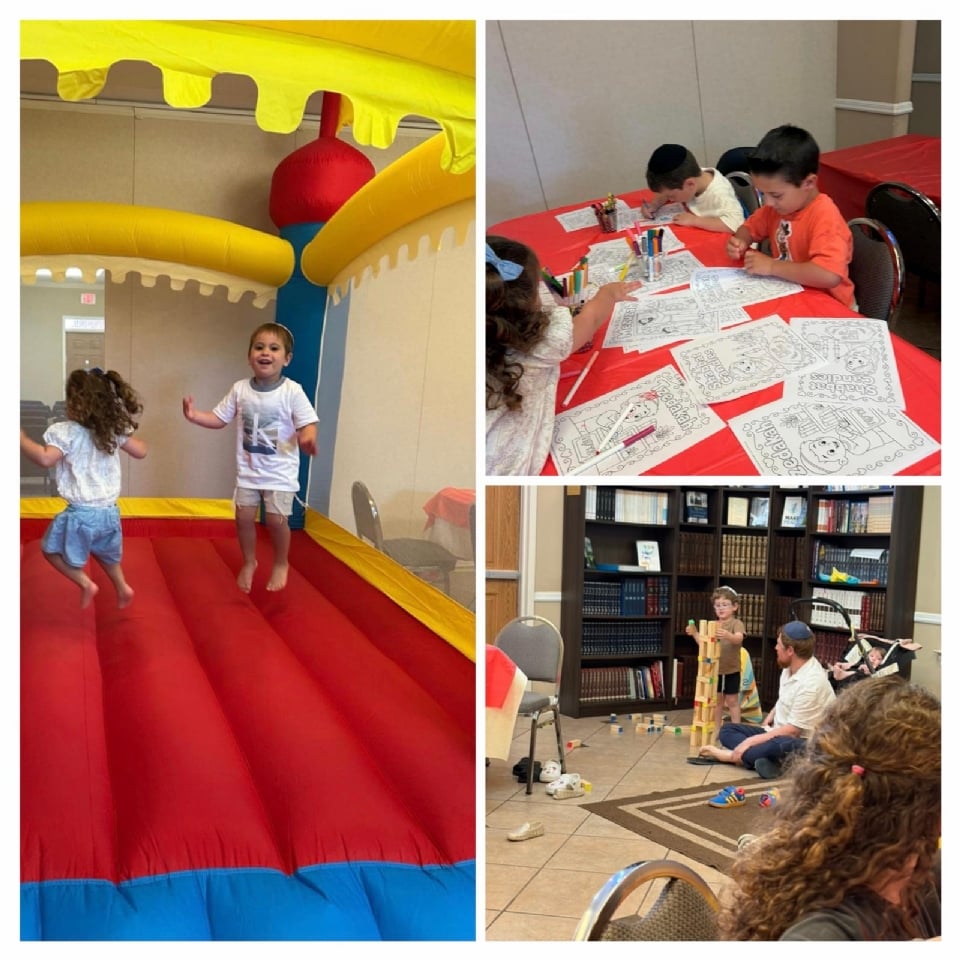
Recent Photos

Latest from www.ChabadSugarland.com

  
History
Should We Celebrate American Independence? The Rebbe's Take
  
By the Numbers
9 Facts About the Jews of Sweden
Sweden is home to a significant Jewish community with a relatively recent history.
  
The Freeman Files
What Is a Mitzvah?
The only way a Creator can connect with a creature is by a simple request.
  
Your Questions
What Blessing Do I Make on Hydroponically Grown Produce?
Can produce grown without direct connection to the earth still be called pri ha’adamah—“fruit of the ground”?

Parshah in a Nutshell


Parshat Pinchas

The name of the Parshah, "Pinchas," refers to Phineas, who zealously avenged G-d’s name, and it is found in Numbers 25:11.

Aaron’s grandson Pinchas is rewarded for his act of zealotry in killing the Simeonite prince Zimri and the Midianite princess who was his paramour: G‑d grants him a covenant of peace and the priesthood.

A census of the people counts 601,730 men between the ages of twenty and sixty. Moses is instructed on how the Land is to be divided by lottery among the tribes and families of Israel. The five daughters of Tzelafchad petition Moses that they be granted the portion of the land belonging to their father, who died without sons; G‑d accepts their claim and incorporates it into the Torah’s laws of inheritance.

Moses empowers Joshua to succeed him and lead the people into the Land of Israel.

The Parshah concludes with a detailed list of the daily offerings, and the additional offerings brought on Shabbat, Rosh Chodesh (first of the month), and the festivals of Passover, Shavuot, Rosh Hashanah, Yom Kippur, Sukkot and Shemini Atzeret.

Learn: Pinchas in Depth
Browse: Pinchas Parshah Columnists
Prep: Devar Torah Q&A for Pinchas
Read: Haftarah in a Nutshell
Play: Pinchas Parshah Quiz


Today's Quote

Just as it is incumbent upon every Jewish man to put on tefilin every day, so is there an unequivocal duty which rests upon every individual, from the greatest scholar to the most simple of folk, to set aside a half-hour each day in which to think about the education of his children.
— Rabbi Sholom DovBer of Lubavitch (1860-1920)

Chabad World News