The River That Waited for a Mitzvah
ב"ה

The Chabad of Sugar Land Weekly Newsletter

Icon
Candle Lighting Times for
Sugar Land, Texas:
Friday, Jun. 26
8:08 pm

Message from the Rabbi

Dear Friends,

One of the privileges of getting older is having memories to look back on. It also comes with the temptation to compare the present to the past. We remember a time when people were more connected, and seemed more patient or more focused. Whether those memories are completely accurate or not, there is something comforting about what is familiar.

The challenge is that nostalgia alone does not preserve what we value. If we want the best parts of the past to remain part of our lives, we have to actively carry them forward. And the Torah gives us a prime example of this: After Miriam and Aaron passed away, the Jewish people lost two sources of blessing that had accompanied them throughout their journey in the desert. Rather than simply mourning what was lost, Moses stepped forward and ensured that those blessings continued. He understood that when something precious is in danger of disappearing, it becomes our responsibility to sustain it.

This message connects with the 12th of Tammuz, the day when the Previous Rebbe, Rabbi Yosef Yitzchak Schneersohn, was liberated from Soviet imprisonment in 1927. At a time when Jewish life was under tremendous pressure, he refused to accept that Judaism belonged only to the past. He risked everything to preserve Jewish life, ensuring that future generations would inherit a living Judaism rather than just memories of one.

Each of us has the ability to do the same. The future of Jewish life is not built by someone else; it’s built by ordinary people who care enough to carry forward what matters.

Shabbat shalom,


Service Times:

Kiddush Sponsored By:

Weekly Parsha Video

Chukat-Balak


Do I Really Have a Purpose and a Calling?

Click here to watch!


Weekly Story


The situation looked bleak.

For months on end, the heavens had been hermetically sealed, with nary a drop of rain in sight. For Reb Aharon Safir, his brother Reb Yitzchak, and their partner Reb Moshe Shwartz, this spelled certain financial ruin.


The three were loggers, spending the spring and summer months in the Polish forests, chopping down trees. When the season drew to an end, they and their crew would tie the logs together in large rafts and send them downstream on the giant Vistula River, where they would float along until they reached the big industrial factories in the port city of Danzig (known as Gdansk in Poland).


That’s how it was every year. But this year, with a totally dry season, the normally majestic Vistula was parched and low. The water wasn’t deep enough, nor the current strong enough to carry the enormous logs along the long winding path to Danzig.

Giant piles of logs lay strewn all over the forest floor, hopelessly waiting for the rain that simply refused to come.


Reb Aharon and Reb Yitzchak were devout Chassidim; Reb Moshe, not so much. With no other possible recourse, the brothers decided to pay a visit to their Rebbe, the esteemed and saintly sage, Rabbi Yechezkel Shraga Halberstam, the Shinover Rebbe.

Reb Moshe passed, opting to stay in his hometown of Zhikov instead.


When the brothers arrived in Shinova, they hurried into the Rebbe’s chamber and threw themselves before him with a desperate plea. “Rebbe, please help us! Our entire life’s fortune lies at stake and the rafts won’t budge! Please, pray to G‑d to bring us blessed rain!”


“You want me to bring rain?” the Rebbe replied in surprise. “Am I G‑d? The Talmud tells us that G‑d holds three keys tightly in His hands—and one of them is rain! What do you expect from me?!”


“But Rebbe, you must help us,” they insisted. “It’s not just our personal fortunes at stake. Our bankruptcy would cause a tremendous desecration of G‑d’s name and impact the lives of so many others. Due to our stellar business records, hundreds of average Jewish families invested their fortunes with us, eagerly awaiting their returns when the logs arrive in Danzig and our vendors pay us.

If we go under, we take them with us!


“And Rebbe, think of all the vendors who will be furious at us, Jewish merchants. The landowners from whom we leased the forested woods, the merchants in Danzig expecting our logs, not to mention the hard-working loggers who sweated away deep in the forests.

Please, Rebbe, you must help us!”


Moved by their passionate pleas, the Rebbe relented. “You know what? Stay here for Shabbat, and let’s see what can be done after Shabbat.”


When Shabbat ended, the brothers returned to the Rebbe.


“I must tell you,” the Rebbe began, “I insist that rain is beyond my realm and is in G‑d’s hands alone. But there is something I can help you with: I have a personal tradition from my revered teacher, the Seer of Lublin, that anyone who helps the descendants of the saintly Rabbi Elimelech of Lizhensk will merit immediate salvation.


“And what do you know? Right here, in my home, lives a poor orphan whom we’ve raised since she was a young child—and she is from the family of Rabbi Elimelech. Alas, my wife and I lack the funds to properly marry her off.

So if you commit to underwriting all of her wedding expenses, I assure you that before the week is out, the Vistula will still flow.”


That was all the pious brothers needed to hear. Without batting an eyelash, they pulled out whatever cash they had on hand, more than enough to pay for the wedding and then some.


The Rebbe accepted the money, and the brothers set off back to the forests to take care of business. In the meantime, they sent a message ahead to their third partner, Reb Moshe, to prepare the logs for passage.


To his credit, Reb Moshe followed their orders despite his skepticism, and his workers immediately started preparing the logs for travel. The laborers sweated and grunted as they collected massive piles of twenty-five logs apiece, and bound them with thick rope.


All the while, the other merchants and loggers laughed at them. “The sky is blue like the sea, the air thick like a blanket, what are you doing?!” they taunted. “You’re wasting your time. It’s not going to rain anytime soon!”


But the three partners paid no attention to their mockery, confident in the tzadik’s blessing that before the week was out, rain would come.


And sure enough, Friday started like every other day of the week: hot and bright.

But as the day wore on, the skies turned a dark gray, thunder clapped, lightning flashed—and sweet, sweet rain roiled the earth with a vengeance.


All the logs in the forest were pulled into the raging river chaotically, smashing into each other and the banks to the point that they were rendered useless.

Only the sturdily bound piles of Safir and Shwartz were peacefully lifted off the ground and sent blissfully downstream to their final destination, their trust in the tzadik’s blessing vindicated.


The lesson is powerful:


The brothers came asking for rain, but the Rebbe showed them that blessing is not only drawn down through prayer - it is drawn down through kindness, and taking responsibility for another Jew. By helping an orphan bride build her future, they opened the gates of blessing for their own.


Sometimes, the key to our own salvation is the good we are willing to do for someone else.


Parsha Riddle!


I tried valiantly to save my master;

In the process, I was given a gift no animal has ever recieved before or since.

What am I?


Think you know it? Reply with your answer!


The answer will appear in next week’s newsletter.


Answer to last week's riddle:

Aaron's staff.

Congratulations M. Gillman on submitted the correct answer!


Ask The Rabbi: Weekly Q&A


Question:

A friend was recently admitted to an emergency room here in Sydney. Part of the intake process is asking if you want to state your religion. In the past, saying “Jewish” was a no-brainer. No fear, no hesitation. These days, however, there’s a creeping anxiety that identifying as Jewish in a hospital could put a target on your back.

We want to be proud, but in this current climate, is it just safer to say nothing?


Answer:

I won’t lecture anyone from the safe distance of my desk.

When you are lying on a hospital bed, vulnerable and wearing one of those flimsy gowns that never quite closes at the back, you don’t need grand speeches about bravery. You need good care and peace of mind.


In Judaism, the preservation of life overrides almost everything. If you ever face a real and immediate threat, protect yourself and do what you must to stay safe.


The question becomes, what defines a real danger? Is being Jewish in an

Australian hospital life-threatening?


A few years ago, such a question would have sounded absurd. But not today. We all saw the disturbing footage of Australian nurses making hateful remarks about treating Israeli patients. It understandably shook the Jewish community.


Thankfully, despite isolated incidents and disturbing rhetoric, Australian hospitals remain places where Jewish patients overwhelmingly receive professional care. 


This doesn’t mean it can’t happen. The threat was real, and must be taken seriously.

But what may be more dangerous than the threat is the way we respond to it.


If we conceal our identity to avoid any risk, we are passively accepting the insane idea that a hospital is a place where a Jew should be afraid.

We take someone else’s dysfunction and make it our new reality.


Hospitals ask because religion can matter. It helps staff understand dietary needs, end-of-life issues, and whether you'd like a visit from a priest, imam or rabbi. Identifying yourself as Jewish is not making a statement. It can help ensure your needs are respected. 


Simply stating your Jewishness is how you put the problem back where it belongs. If a staff member has an issue with your identity, that is not a Jewish problem. That is a hospital problem.

You do not accommodate someone else’s pathology by shrinking yourself.


If you genuinely feel unsafe in a specific setting, take precautions. Ask family to be present. Speak to hospital management. Contact your rabbi and local community organizations.

Jewish law never asks us to ignore our feelings. It asks us to distinguish between a concrete danger and a frightening possibility. 


So ask yourself: am I responding to a real threat in front of me, or am I letting fear decide how Jewish I am allowed to be? 


Don't let fear hold the pen for you. Write the truth. Say you are Jewish.

And if someone has a problem with that, then they should be checking in to the hospital, not you.


Good Shabbos,
Rabbi Moss

Upcoming Events

Shabbat Services
Shabbat, Jun. 27, 2026 - 10:00 am
At the Chabad Center in Sugar Land, we offer Shabbat and holiday services that are joyous, engaging and uplifting.
Tefillin and Breakfast
Sunday, Jun. 28, 2026 - 9:00 am
Start the week off right! Shacharit prayers, a gourmet bagel breakfast and screening of the weekly Living Torah video
Summer Sunday FunSeries!
Sunday, Jun. 28, 2026 - 3:00 pm
Sunday #1: Bubble Blast! An amazing indoor bubble show packed with interactive fun, laughter, and surprises.

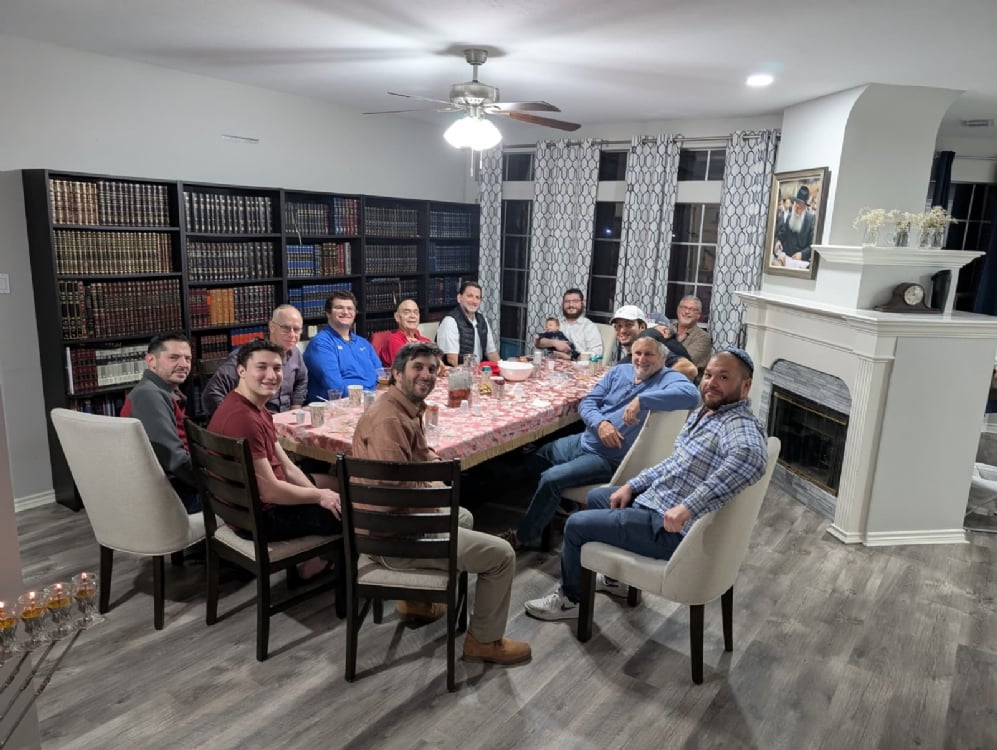
Recent Photos

Latest from www.ChabadSugarland.com

  
By the Numbers
12 Facts About the Mysterious Red Heifer
One of the Torah’s most enigmatic commandments that left even King Solomon, the wisest of all humans, utterly perplexed.
  
Your Questions
Do Jews Believe in Magic or Witchcraft?
The answer seems simple enough: The Torah itself references witchcraft . . .
  
Quiz
10 Questions: Take the Holy Temple Quiz
What do you know about this holiest spot on earth?
  
History
The Forgotten Pioneer of Chabad Women’s Activism

Parshah in a Nutshell


Parshat Chukat-Balak

The name of the Parshah, “Chukat,” means “Statute [of the Torah]” and it is found in Numbers 19:2. The name of the Parshah, “Balak,” refers to Balak, king of Moab, and it is found in Numbers 22:2.

Moses is taught the laws of the Red Heifer, whose ashes purify a person who has been contaminated by contact with a dead body.

After 40 years of journeying through the desert, the people of Israel arrive in the wilderness of Zin. Miriam dies and the people thirst for water. G-d tells Moses to speak to a rock and command it to give water. Moses gets angry at the rebellious Israelites and strikes the stone. Water issues forth, but Moses is told by G-d that neither he nor Aaron will enter the Promised Land.

Aaron dies at Hor Hahar and is succeeded in the High Priesthood by his son Elazar. Venomous snakes attack the Israelite camp after yet another eruption of discontent in which the people "speak against G-d and Moses"; G-d tells Moses to place a brass serpent upon a high pole, and all who will gaze heavenward will be healed. The people sing a song in honor of the miraculous well that provided the water in the desert. Moses leads the people in battles against the Emorite kings Sichon and Og (who seek to prevent Israel's passage through their territory) and conquers their lands, which lie east of the Jordan.

Balak, the King of Moab, summons the prophet Balaam to curse the people of Israel. On the way, Balaam is berated by his donkey, who sees the angel that G-d sends to block their way before Balaam does. Three times, from three different vantage points, Balaam attempts to pronounce his curses; each time, blessings issue instead. Balaam also prophesies on the end of days and the coming of Moshiach.

The people fall prey to the charms of the daughters of Moab and are enticed to worship the idol Peor. When a high-ranking Israelite official publicly takes a Midianite princess into a tent, Pinchas kills them both, stopping the plague raging among the people.

Learn: Chukat-Balak in Depth
Browse: Chukat-Balak Parshah Columnists
Prep: Devar Torah Q&A for Chukat-Balak
Read: Haftarah in a Nutshell
Play: Chukat-Balak Parshah Quiz


Today's Quote

Any dispute that is for the sake of Heaven is destined to endure; one that is not for the sake of Heaven is not destined to endure
— Ethics of the Fathers 5:17

Chabad World News